
Accelerated software delivery models now determine corporate dominance, shifting engineering paradigms away from slow, manual deployment methods toward unified, automated architectures. This urgent transition leaves many traditional infrastructure administrators behind, creating a highly competitive market where organizations prioritize professionals with verifiable automation capabilities. Navigating this vast sea of technological choices frequently induces analysis paralysis among ambitious developers looking to elevate their career trajectories. This analytical resource establishes a pristine, objective framework for assessing the global technical credential market, allowing you to execute calculated professional upgrades. By replacing directionless studying with concrete, industry-standard metrics, engineers can directly match their skill sets with modern corporate needs. To begin this systemic transformation, engineering candidates should inspect the operational mechanisms of the premier Best DevOps Certification framework to map out their future educational milestones.
What Is a Best DevOps Certification?
The Core Purpose of Best DevOps Certification
This rigorous professional validation establishes definitive proof that an engineer can successfully fuse software development lifecycle demands with complex production environments. International enterprises leverage these formalized credentials to vet potential hires, ensuring that incoming staff can instantly compress deployment timelines while reinforcing overall cluster reliability. Ultimately, this mechanism replaces speculative interviewing with objective, performance-driven validation, tying professional capability directly to live ecosystem execution.
How the Best DevOps Certification System Works
The evaluation system operates via isolated cloud testing environments where candidates must actively diagnose live application crashes, build robust code pipelines, and provision virtual infrastructure. Automated scoring engines trace every keystroke, evaluating candidates based on script accuracy, infrastructure security posture, and resource consumption efficiency. Consequently, only practitioners who demonstrate sharp algorithmic reasoning and deep command-line mastery can secure passing marks.
Eligibility Standards vs. Selection Criteria
Surviving the modern technology landscape requires a sharp distinction between passing basic registration checks and satisfying elite corporate recruitment benchmarks. While basic eligibility ensures that an applicant understands fundamental technology concepts, competitive selection criteria demand deep architectural problem-solving capabilities.
- Basic Eligibility: Confirming basic command-line navigation skills, fundamental programming literacy, and standard networking knowledge.
- Selection Criteria: Presenting a documented history of managing multi-region cloud applications, orchestrating secure microservices, and leading enterprise automation initiatives.
Best DevOps Certification Components: The Building Blocks
Age Factors in Best DevOps Certification
Chronological age means nothing in the cloud engineering landscape; rather, the overall adaptability and systemic relevance of an engineer's career choices dictate their value. Infrastructure veterans who cut their teeth on physical, bare-metal servers must continuously overhaul their technical mental models to accommodate modern declarative code patterns. Certification frameworks deliberately favor professionals who showcase continuous learning, proving they can translate time-tested systems stability principles into modern, transient container networks.
Educational Evaluation for Best DevOps Certification
While an undergraduate diploma in computer science builds a strong conceptual foundation in core computing theory, modern enterprises demand specialized, tool-focused validation. The formal application process scrutinizes an engineer's targeted training history, confirming their fluency in continuous integration mechanics and software-defined networking paradigms. This thorough vetting reassures enterprise managers that the engineer possesses the structural discipline required to operate massive, high-throughput cloud environments safely.
Performance Standards and Benchmarks
Earning a premier technical credential mandates absolute adherence to challenging performance metrics across multiple distinct engineering fields. Evaluation matrices require candidates to construct continuous delivery pipelines that can compile, test, and release code patches without any human oversight. Furthermore, grading algorithms severely penalize brittle, imperative scripting habits, ensuring that only engineers who deliver highly repeatable, self-healing systems achieve elite validation.
Professional Experience Verification
The final pillar supporting this technical validation involves a comprehensive, evidence-based review of a professional's live production history. Candidates must supply verifiable documentation highlighting their hands-on leadership during real-world system upgrades, automated failures, and zero-downtime cluster rollouts. This rigorous background vetting successfully weeds out purely theoretical test-takers, certifying that the credential remains a dependable indicator of true engineering competence.
Primary Frameworks Governing Best DevOps Certification
The Detailed Score Breakdown
Securing a top-tier industry credential requires a precise understanding of the weight assigned to each architectural domain within the evaluation matrix. The total evaluation score represents a holistic blend of continuous integration design, infrastructure as code implementation, and real-time observability setup.
[Continuous Integration Mastery]  ---> 30% of Total Score
[Infrastructure as Code Design]    ---> 30% of Total Score
[Observability & Monitoring]       ---> 20% of Total Score
[Security & Compliance Integration] ---> 20% of Total Score
As illustrated above, failing to master infrastructure automation or continuous integration workflows will completely undermine a candidate's overall score, regardless of their performance in secondary categories.
Real-World Application Scenarios
To illustrate how these grading systems function, consider an enterprise cloud migration project. The validation matrix directly tests whether an engineer can translate abstract, high-level business goals into scalable, self-healing code repositories. Consequently, the scoring system awards maximum points to solutions that proactively incorporate security scanning and cost optimization rules directly into the initial deployment scripts.
International Pathways for Best DevOps Certification
Key Categories and Classes
The global certification architecture divides professional technical tracks into highly targeted learning pathways tailored to explicit career goals. These pathways range from broad, platform-agnostic methodology validations to deeply specialized cloud provider specializations.
- Platform-Agnostic Methodology Path: Focuses on pure, universal architectural concepts like site reliability engineering and universal container orchestration.
- Cloud-Specific Ecosystem Path: Concentrates on deeply mastering provider-specific automation tools, including AWS CloudFormation or Azure Resource Manager templates.
- Security-First Automation Path: Prioritizes the seamless integration of automated vulnerability testing and compliance policies directly into active deployment pipelines.
Comparative Results Summary
Different validation pathways yield completely different operational capabilities and career specializations. Choosing the correct focus directly dictates an engineer's day-to-day responsibilities in enterprise environments.
| Validation Path | Primary Core Focus | Primary Architectural Target |
|---|---|---|
| Methodology Path | Universal systems reliability | High-scale, cross-platform architecture |
| Cloud-Specific Path | Provider optimization | Deep, native ecosystem exploitation |
| Security-First Path | Automated compliance | Vulnerability elimination across pipelines |
Advanced Regional Requirements for Best DevOps Certification
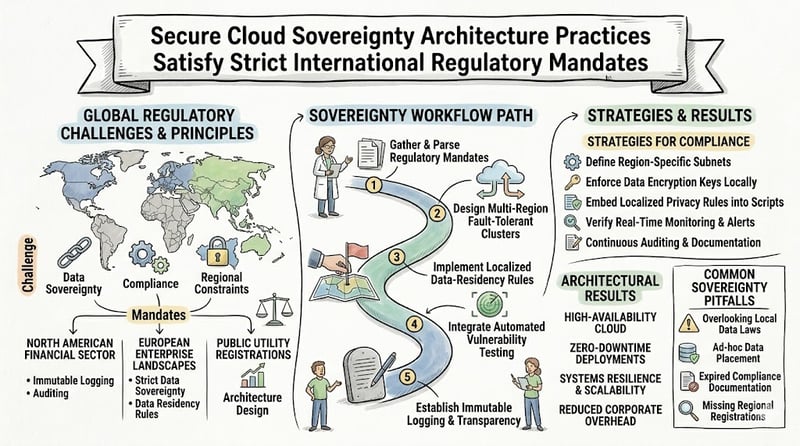
Different geographical technology hubs frequently impose unique, highly localized professional requirements that directly influence how automated systems are managed. For instance, European enterprise landscapes mandate strict compliance with complex data sovereignty laws, forcing engineers to embed localized data-residency rules directly into their infrastructure scripts.
Conversely, the North American financial sector requires rigorous adherence to strict auditing standards, which demands completely transparent, immutable logging across all automated pipelines. Therefore, top-tier engineering validations must actively test an engineer's capacity to configure infrastructure that remains fully compliant with these varied regional laws.
Furthermore, certain regions require engineers to hold valid local professional registrations before they can oversee critical public utility or government infrastructure automation projects. Consequently, professionals must carefully choose validation paths that explicitly respect and integrate these complex regional legal frameworks.
The Global Landscape of Best DevOps Certification
The global tech industry values credentials that clearly translate into immediate operational success, regardless of geographic location. Major international corporations rely on a specific core set of validation standards to assess incoming engineering talent.
- The North American Framework: Emphasizes deep, native cloud provider integration and immediate, large-scale commercial tool deployment.
- The European Standard: Heavily prioritizes strict open-source architectural alignment, comprehensive data privacy configuration, and long-term systems sustainability.
- The Asia-Pacific Model: Strongly focuses on high-velocity delivery metrics, extreme cost optimization, and massive-scale automation throughput.
Benefits of Utilizing a Best DevOps Certification
Cost Efficiency
Selecting a highly structured, internationally recognized validation pathway prevents engineers from squandering money on fragmented, obsolete learning materials. For enterprises, onboarded personnel holding these verified credentials require minimal internal training, instantly lowering operational overhead and driving immediate engineering value.
Instant Reality Checks
Preparing for a rigorous, hands-on engineering examination exposes an individual's hidden knowledge deficiencies with brutal accuracy. This immediate feedback loop shatters false confidence, forcing candidates to confront and remedy critical gaps in their understanding of live configuration management.
Strategic Long-Term Planning
Earning a globally respected credential provides a rock-solid foundation for multi-decade career sustainability and professional growth. As legacy corporate IT infrastructure becomes entirely obsolete, certified automation professionals remain perfectly insulated from economic shifts, holding the keys to future enterprise modernization.
Step-by-Step Guide to Mastering Best DevOps Certification
Gathering Necessary Documents
Begin the validation journey by systematically compiling all critical professional and academic verification materials. This step requires gathering verified employment certificates specifying your precise engineering roles, along with official transcripts from technical training facilities.
Practicing the Core Assessments
Dedicate extensive daily blocks to building, breaking, and repairing complex local lab environments that replicate official testing criteria. Focus deeply on engineering multi-stage continuous integration workflows that handle real-world challenges, such as database migration failures and broken microservice dependencies.
Checking Market Demand Lists
Analyze current global employment data frequently to identify which specific cloud networks or orchestration frameworks command the highest financial premiums in the enterprise market. This continuous market research ensures your educational investments directly align with high-paying corporate resource shortages.
Adding Secondary Factors
Augment your core automation expertise by acquiring secondary credentials in adjacent engineering spaces, such as enterprise agile management or network security auditing. Combining these auxiliary skills builds a unique professional profile that allows you to guide cross-functional teams and executive leadership smoothly.
Calculating the Final Result
Conclude your rigorous exam preparation by taking comprehensive, simulated practice exams under strict, real-world time limits. Meticulously grade your performance across every individual technical segment to guarantee you reliably beat the required passing score before paying for the official attempt.
Strategies to Optimize Your Best DevOps Certification Score
The Performance Enhancement Strategy
Achieving a flawless score on practical, hands-on automation exams requires the complete abandonment of graphical user interfaces and manual web consoles. Instead, force yourself to write every single configuration utilizing declarative code and advanced terminal interfaces. This methodology drastically accelerates your execution speeds during the test, while entirely preventing the accidental setting errors that frequently sabotage average candidates.
Bonus Qualification Advantages
Many top-tier examination bodies award substantial score credits to candidates who hold verifiable foundational credentials in traditional networking or system virtualization. Consequently, clever engineers often pass these introductory system administration tests first, building an advantageous scoring cushion before attacking the main examination.
Specialized Opportunity Pathways
Modern enterprise ecosystems favor hyper-focused expertise over general technical familiarity. Focusing your technical preparation on fast-growing niches, like automated artificial intelligence deployment pipelines or high-compliance healthcare cloud environments, grants access to elite certification tracks that command massive market compensation.
Comprehensive Top 20 Global Tech Certifications Matrix
The following verified matrix provides direct navigational access to the premier international certification programs currently dominating the enterprise landscape.
| Certification Title | Core Technology Focus | Target Professional Role |
|---|---|---|
| DevOps Certified Professional (DCP) | Core Infrastructure Automation | Systems Automation Engineer |
| DevSecOps Certified Professional (DSOCP) | Pipeline Security Integration | DevSecOps Security Engineer |
| Site Reliability Engineering (SRE) Certified Professional | Systems Resilience & Scalability | Site Reliability Engineer |
| Master in DevOps Engineering (MDE) | Advanced Enterprise Architecture | Principal DevOps Architect |
| Master in Azure DevOps | Microsoft Cloud Automation | Azure Cloud Engineer |
| AWS Certified DevOps Professional | Amazon Web Services Ecosystem | AWS Infrastructure Architect |
| Master in Python Programming | Automated Scripting & Tooling | Systems Tooling Developer |
| Hashicorp Certified Terraform Associate | Declarative Infrastructure as Code | Infrastructure Automation Specialist |
| Certified Kubernetes Administrator (CKA) | Production Container Orchestration | Kubernetes Cluster Administrator |
| Docker Certified Associate (DCA) | Container Runtime Management | Containerization Engineer |
| Envoy ISTIO Certification Training | Service Mesh & Traffic Routing | Microservices Network Architect |
| MLOps Certification Training Course | Machine Learning Automation | MLOps Platform Engineer |
| Google Cloud Professional Cloud DevOps Engineer | Google Cloud Infrastructure | GCP Optimization Engineer |
| Master in Machine Learning | Automated Algorithmic Pipelines | ML Infrastructure Specialist |
| Master in Artificial Intelligence | Cognitive System Integration | AI Automation Architect |
| Master in AppDynamics | Enterprise Application Monitoring | Performance Observability Specialist |
| Master in Data Science | Large-Scale Data Automation | Data Pipeline Engineer |
| Master in Deep Learning | Neural Network Infrastructure | Neural Pipeline Specialist |
| Prometheus with Grafana | Advanced Metric Telemetry | Observability Systems Engineer |
| GitOps Certified Professional (GOCP) | Declarative Git-Driven Deployment | GitOps Automation Architect |
Common Mistakes in the Best DevOps Certification Process
Overestimating Attributes
A frequent, catastrophic error involves applicants assuming that years of unstructured, manual scriptwriting automatically guarantee success on modern architectural exams. Modern testing platforms deliberately expose these poor habits, strictly requiring the implementation of advanced, stateful automation models instead of messy ad-hoc fixes.
Wrong Classification Codes
During the initial registration phase for regional technical streams, candidates frequently select inaccurate occupational codes that fail to represent automation engineering. This small clerical blunder often triggers automated system rejections during the background checking phase, nullifying months of preparation.
Using Expired Documents
Technology vendors frequently change their exam blueprints, introducing newer software versions and abandoning legacy tools entirely. Attempting to study with outdated preparation guides or obsolete software dependencies will leave you deeply disoriented when facing the current, live testing environment.
Real-Life Case Scenarios Using Best DevOps Certification
The Early Career Scenario
Consider a young technical assistant who answers phones at a regional helpdesk but wants to pivot into core platform engineering. By systematically following a highly structured automation path, they replace basic desktop troubleshooting knowledge with complex infrastructure orchestration skills. This undeniable proof of capability enables them to completely skip traditional multi-year junior positions, securing a well-funded platform engineer role directly.
The Experienced Professional Scenario
Imagine a senior database administrator with decades of experience who watches their manually managed servers get replaced by automated cloud engines. By clearing an advanced site reliability certification, they map their extensive data-storage wisdom onto automated container environments. This proactive transformation rescues their fading career track, positioning them as a highly valued data architect within modern engineering departments.
The Specialized Hero Scenario
Picture a cybersecurity engineer tired of development squads disabling critical network firewalls just to hit fast deployment milestones. By achieving a master-level automated security credential, they learn to embed security checks directly into the continuous delivery pipeline. This specific synthesis of speed and compliance turns them into an indispensable corporate champion, driving deployment speeds higher without ever creating new security liabilities.
Frequently Asked Questions (FAQs)
Which technical domain carries the heaviest weight during a performance-based automation assessment?
Infrastructure orchestration and continuous deployment design share the largest point allocation, demanding absolute fluency from anyone wishing to clear the examination.
Can candidates use graphical user interfaces to complete real-time cluster configuration tasks during the exam?
No, testing environments purposefully restrict access to web dashboards, requiring candidates to perform all infrastructure modifications via terminal commands and code manifests.
How do advanced technical validations verify the authenticity of an applicant's documented professional experience?
Vetting bodies utilize comprehensive background checks, official employer verification letters, and detailed technical interviews to confirm an individual's production history.
Why do modern cloud certification frameworks include strict automated compliance testing in their blueprints?
Enterprises face immense global regulatory scrutiny, meaning automation engineers must know how to build security checks directly into code configurations automatically.
What specific scripting languages should a candidate master before booking a high-level automation exam?
Engineers should develop deep, functional fluency in Python syntax and Shell scripting, as these tools dominate real-world configuration pipelines.
How do cloud-agnostic credentials compare to vendor-specific paths regarding career mobility?
Cloud-agnostic validations provide broad, universal architectural mobility, whereas vendor-specific paths offer maximum optimization depth within one particular platform.
What happens if an engineer allows their technical automation credential to expire after three years?
The individual loses their active status in the global registry, requiring them to clear the updated examination to reclaim their professional standing.
Are practice lab environments absolutely mandatory for clearing high-tier system reliability validations?
Yes, theoretical reading alone cannot teach the rapid troubleshooting reflexes required to solve the live system failures presented in modern practical exams.
How do modern testing platforms prevent candidates from memorizing exam questions beforehand?
Testing engines utilize dynamic question pools that randomly generate completely different infrastructure failure scenarios for every single test-taker.
Do these professional engineering credentials offer any value to individuals working in non-technical management roles?
Yes, because acquiring this structural knowledge allows product owners and technology executives to evaluate technical roadmaps and lead development departments with total authority.
CONCLUSION
Embracing structured professional certification offers engineers an unassailable strategy for maintaining industry relevance in a volatile marketplace. As automated frameworks continuously make manual operational systems obsolete, certified specialists remain perfectly insulated against corporate downscaling. Investing the personal energy needed to master an intense, performance-driven testing path ensures your long-term viability across global enterprise projects. Ultimately, this proactive educational dedication converts industry disruptions into steady, predictable steps toward premium compensation and technical authority.



Top comments (0)